Opposition Set to Approach Lok Sabha Speaker Over Waqf Bill Panel Dispute
Delhi, October 14 ,2024 :- Opposition members of parliament boycotted a key parliamentary committee meeting on Monday, citing concerns over the panel’s adherence to proper rules and regulations. The meeting was convened to examine the Waqf (Amendment) Bill, but opposition leaders expressed dissatisfaction with the way it was conducted.
Prominent opposition figures, including Congress’s Gaurav Gogoi and Imran Masood, DMK’s A. Raja, Shiv Sena (UBT) leader Arvind Sawant, AIMIM chief Asaduddin Owaisi, Samajwadi Party’s Mohibullah, and AAP’s Sanjay Singh, walked out of the session in protest. They raised concerns about the committee’s procedures and accused the government of not being transparent in its intentions.
In a joint statement, the opposition leaders declared, “When a meeting is called while ignoring the rules and regulations, there is no question of participating in such proceedings.” The opposition further stressed that their concerns stem from doubts about the government’s approach towards the Waqf Bill.
Addressing the media, Arvind Sawant stated that the Joint Parliamentary Committee (JPC) tasked with reviewing the bill was not following established protocols. He reiterated that the opposition’s protest was based on procedural lapses.
In addition to procedural concerns, some MPs alleged that personal accusations were made against senior opposition leaders, such as Congress President Mallikarjun Kharge, by individuals appearing before the committee. This further fueled the opposition’s decision to boycott the session.
Following their walkout, the opposition members convened a separate meeting to discuss their future course of action. Several members suggested that they would raise their concerns with the Speaker of the Lok Sabha. Meanwhile, the JPC, chaired by veteran BJP MP Jagdambika Pal, continued its proceedings despite the opposition’s absence.
Jamiat Ulama-i-Hind’s Engagement with Waqf Committee
Earlier, a delegation from Jamiat Ulama-i-Hind, led by Maulana Mahmood A. Madani, met with the Joint Parliamentary Committee to present their concerns regarding the Waqf (Amendment) Bill 2024. Senior Advocate Rauf Rahim provided a detailed legal analysis, focusing on the potential constitutional implications of the bill and its impact on Waqf properties and the rights of Muslims.
Opposition Plans Further Action
The opposition MPs have decided to approach the Speaker of the Lok Sabha to formally present their grievances regarding the functioning of the JPC on the Waqf Bill, seeking a resolution to their concerns about the panel’s conduct.
Unity in Cultural Celebrations, a Hope for Public Welfare Collaboration
Hyderabad October 13, 2024 :- In a rare display of unity, political leaders from various parties set aside their differences to attend the annual ‘Alai Balai’ program in Hyderabad. Hosted by Bandaru Dattatreya, currently serving as the Governor of Haryana, the event traditionally takes place after Dussehra and fosters camaraderie among leaders from all political affiliations.
The event, held at the Exhibition Grounds, featured cultural programs that showcased the rich heritage of Telangana. Attendees were treated to a grand feast with nearly 60 different dishes, including mutton and chicken biryani, fish curry, and other regional delicacies, reflecting the state’s culinary diversity.
Prominent figures such as former Vice President of India M. Venkaiah Naidu, Telangana Governor Jishnu Dev Varma, Telangana Chief Minister A. Revanth Reddy, Union Minister G. Kishan Reddy, Uttarakhand Governor Gurmit Singh, Rajasthan Governor Haribhau Bagade, and Meghalaya Governor Vijayashankar were present at the occasion. Joining them were state minister Ponnam Prabhakar, BJP MPs K. Laxman, Eatala Rajender, and Vishweshwar Reddy, along with Congress leaders K. Kesava Rao, V. Hanumantha Rao, MLC M. Kodandaram, and BR’s leader T. Srinivas Yadav, among others.
In a significant gesture, leaders from almost every political party came together to celebrate the event, enjoying the program’s activities and festivities. Many observers noted that if these leaders, who managed to set aside their political differences for this cultural gathering, could unite in the same way on public issues, the state and the nation could see much-needed progress. Such cooperation would not only ensure the development of the state but also improve the lives of the people. It is time for political leaders to give thought to working together on public welfare issues.
The highlight of the gathering was a feast featuring nearly 60 varieties of dishes, including traditional delicacies such as mutton and chicken biryani and fish curry. Bandaru Dattatreya, who has been hosting the ‘Alai Balai’ event in Hyderabad for the past 19 years, was lauded by Telangana Governor Jishnu Dev Varma and Chief Minister A. Revanth Reddy for his consistent efforts in organizing the program since 2005.
Lt. Gen. Gurmit Singh, PVSM, UYSM, AVSM, VSM (Retd.), Governor of Uttarakhand, expressed his thoughts about the event in a tweet: “Attended the Alai Balai in Hyderabad today, a festival that beautifully highlights the spirit of unity in diversity. This celebration teaches us that despite our cultural, political, or social differences, we are all connected by shared values and traditions, much like the festival of Dussehra. Coming together in harmony strengthens us as a community.”
During the Alai Balai festival, the meanings of ‘Alai’ as waves and ‘Balai’ as blessings were evident throughout the event. The waves symbolized the coming together of people from all walks of life, while the blessings were a reminder of the unity fostered through this gathering. Just as Dussehra signifies the triumph of good over evil, Alai Balai encourages people to overcome their differences and embrace peace and harmony.
Alai Balai is more than just a celebration—it is a platform that supports local artisans, folk traditions, and crafts, which are the heart of Telangana’s cultural identity. As the state continues to celebrate Dussehra and other festivals, it is crucial to preserve and promote these traditions for future generations. Governor Gurmit Singh also expressed his heartfelt appreciation to the event’s organizers for fostering unity and celebrating Telangana’s vibrant heritage.
Hyderabad Oct 13, 2024 :- In a pointed critique of an alleged BJP-Congress alliance in Telangana, BRS Working President K.T. Rama Rao (KTR) on Sunday questioned the purpose behind the Congress leaders’ ‘protective shield’ of illicit wealth. He expressed astonishment over the silence of both parties in the face of recent Enforcement Directorate (ED) raids in the state.
Taking to the social media platform X, KTR raised questions regarding the lack of reaction from both the BJP and Congress on the ED’s operations, seeking to uncover who the ‘Big Brother’ is that is protecting Congress leaders from the scrutiny of the central investigative agency. KTR highlighted the fact that while BJP and Congress appear to be rivals in Delhi, there seems to be an understanding between the two in Telangana. He emphasized that despite ED raids on Congress leaders, BJP leaders have maintained a “conspicuous silence,” raising suspicions about who is safeguarding the Congress leaders from these investigations.
Quoting the saying, “Truth is stranger than fiction,” KTR remarked that this seems fitting for the political events unfolding in Telangana. He referenced two major instances – an ED raid on the residence of a wealthy Congress leader in Telangana two weeks ago, where media reports suggested the recovery of hundreds of crores in cash. Despite the magnitude of the raid, neither Congress, BJP, nor the ED have issued any statements.
KTR also recalled ED’s previous disclosure that ₹40 crore, linked to the Valmiki scam in Karnataka, was allegedly funneled by Congress to Telangana during the recent parliamentary elections. Despite the severity of this claim, no arrests or formal investigations have followed.
Suggesting a deeper political conspiracy, KTR questioned the motives behind these delays in action.
“The public deserves to know who the ‘Big Brother’ is ensuring that Congress leaders in Telangana are shielded from ED investigations,” he stressed, calling for transparency and accountability in the matter.
They say reality is stranger than fiction & I am compelled to believe it now
✳️ A filthy rich congress minister in Telangana gets raided by Enforcement Directorate two weeks ago. Media reports that 100s of crores of cash was being counted
Warangal October 13, 2024 :- Tensions within the Congress Party in Warangal district have intensified between two key factions, led by Minister Konda Surekha and MLA Revuri Prakash Reddy. This comes as a reflection of a long-standing issue within the Congress where internal unity seems elusive, and disagreements among its leaders are frequent. Such internal discord has been a pattern in the Congress Party, a factor that many believe kept the party out of power in Telangana for the past 10 years. Despite only recently forming the government in the state, these factional differences have resurfaced publicly, revealing an enduring issue within the party’s ranks.
According to reports, the clash erupted in Dharmaram over a controversy involving flex banners put up by Konda’s supporters, which notably excluded Reddy’s image. This omission sparked outrage among Reddy’s followers, leading them to tear down the banners. A heated exchange ensued between the two groups, resulting in multiple injuries during the scuffle.
In retaliation for the removal of the banners, Konda Surekha’s supporters organized a large protest, blocking the Warangal-Narsampet highway in Dharmaram. They openly opposed Reddy, accusing him of filing false cases against them and harassing their faction. The protest caused significant traffic disruption, drawing considerable public attention.
The situation escalated to the point where Minister Konda Surekha and Police Commissioner Amber Kishore Jha visited Geesugonda Police Station to gather details regarding the cases filed against Konda Surekha’s supporters.
This incident has once again highlighted the ongoing factionalism within the Congress Party in Warangal, as tensions between the two leaders’ camps continue to simmer. The re-emergence of internal conflicts within the Congress so soon after regaining power in Telangana signals that these disagreements are far from being resolved.
On Saturday, an astonishing incident occurred in Jaipur, Rajasthan, leaving everyone stunned. In the Sodala area, during the afternoon, a moving car suddenly caught fire. However, the driver and the passengers managed to exit the vehicle just in time. What followed left bystanders in shock—the car, despite being on fire, continued to drive on its own down the road, creating an atmosphere of panic among those present.
The blazing car hit a motorcyclist, causing further chaos. Those on motorcycles fled in fear, with one motorcyclist even abandoning his bike on the road to escape. As seen in the video, the biker, terrified, ran as the burning car came towards him. The scene of fear and confusion on the street was evident.
The fire is believed to have been caused by a short circuit in the car, and thankfully, no injuries were reported. Official confirmation of the cause is still awaited. Firefighters reached the scene after receiving the alert, but by then, the car had been completely engulfed in flames.
In a video lasting 1 minute and 4 seconds, the car can be seen moving a significant distance on its own. It first collided with a motorcycle and then passed dangerously close to another car, before finally hitting the road divider and coming to a halt. Flames and thick black smoke billowed out as the car struck the divider. The traffic on the road was thrown into disarray, with people scrambling to safety.
Within moments, the video went viral on social media, capturing this incredible scene of a car ablaze and running wild on the streets of Jaipur.
Hyderabad October 13, 2024 :- The body of Baba Siddique, who was tragically murdered, was transferred from Lilavati Hospital to Cooper Hospital for an autopsy this morning. After the post-mortem, his body was taken to his residence at Maqba Heights in Bandra. His final rites are scheduled for this evening, and after the Isha prayers, the Namaz-e-Janaza will be offered at around 9:00 PM. The burial will take place at Bada Qabrastan, Marine Lines.
Baba Siddique was a highly respected personality with deep connections in the film industry, including close ties with several top heroes.
NCP (SP) State President Jayant Patil expressed shock at the murder, calling it “shocking and shameful” for the state. He stated, “Crimes against women continue unabated, and gang wars have become a common occurrence in cities like Pune. It has become evident that law and order in the state have hit rock bottom. If a leader of the ruling coalition is not safe, how can the government ensure the safety of the common man?” Patil questioned.
In his statement, Mr. Patil also pointed out previous incidents, noting that a BJP MLA had fired shots inside a police station, and a former corporator had died during a Facebook live session, further illustrating the deteriorating law and order situation in the state.
The Lawrence Bishnoi gang has claimed responsibility for Siddique’s murder. He was shot dead near his son Zeeshan’s office in Bandra on Saturday night. According to an Indian Express report, Mumbai police have confirmed the involvement of jailed gangster Lawrence Bishnoi in the murder of the 66-year-old NCP leader Baba Siddique. The police revealed that three shooters were involved in the assassination—Dharamraj Kashyap (19) from Uttar Pradesh and Gurmail Baljit Singh (23) from Haryana have been arrested, while Shiv Kumar Gautam from Uttar Pradesh remains at large. Police suspect a fourth accomplice may have also been involved in the murder.
Reports also indicate that security has been tightened at film star Salman Khan’s residence. The high-profile murder has created an atmosphere of fear in Mumbai, with many concerned for their safety.
Opposition parties have criticized the intelligence department following this case, blaming the incident on government negligence. Many are questioning whether Mumbai’s situation will improve or if the city will once again gain a reputation as a hotspot for violent incidents.
However, the true motive behind Baba Siddique’s murder will only be known after a thorough police investigation.
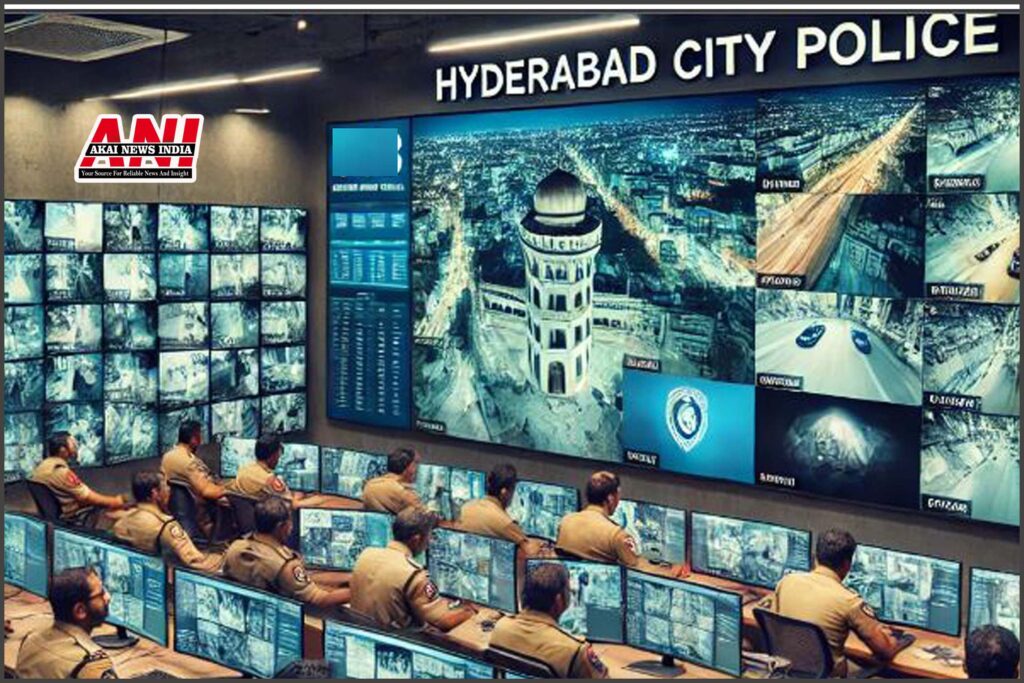
Hyderabad – October 13 , 2024 :- On Saturday night, local residents in Pochamma Basti, Masab Tank, Hyderabad, reported finding pieces of meat within the premises of a temple. The discovery alarmed the community, and the police were immediately informed. Acting swiftly, the police conducted an investigation and reviewed the nearby CCTV footage.
The footage revealed that a pair of stray dogs had brought the meat from elsewhere and left it in the temple premises. The police have urged the public not to believe in unnecessary rumors and assured that the situation was under control due to their prompt actions.
This timely investigation by the police has prevented any disruption to the peace and harmony in Hyderabad. Known for its rich Ganga-Jamuni culture, Hyderabad is a symbol of communal unity, with its citizens setting an example of coexistence far and wide. The community understands that hatred leads to nothing, and in times of need, neighbors are always there to support one another.
Mumbai, October 12: Baba Siddique, a senior leader from the Ajit Pawar faction of the NCP and a former Maharashtra minister, was tragically shot dead by unidentified assailants in Bandra, Mumbai. The incident took place near Nirmal Nagar, close to Colgate Ground, outside the office of his MLA son, Zeeshan Siddique.
According to an official report by PTI, multiple rounds were fired at the scene. Police teams swiftly arrived and further investigations are underway. Siddique was rushed to Lilavati Hospital, where doctors confirmed his death.
This tragic event occurred just ahead of the Maharashtra Assembly elections, intensifying the political atmosphere in the state.
Chief Minister Eknath Shinde, while addressing the media, stated that Mumbai Police Commissioner Vivek Phansalkar informed him of two suspects being arrested. The arrested individuals are reportedly from Uttar Pradesh and Haryana, while a third suspect remains at large.
Opposition parties have criticized the government, calling for accountability in the wake of this shocking murder. The news of Baba Siddique’s death has spread like wildfire across the country, causing widespread outrage.
Adding to the complexity of the case, there are reports suggesting that this deadly attack on Baba Siddique may be linked to the recent shooting incident outside Bollywood actor Salman Khan’s residence. Baba Siddique was the first person to visit Salman Khan’s home after shots were fired there, raising questions about whether these incidents are connected.
In a fresh update, it has been reported that actor Sanjay Dutt has also arrived at the hospital, following news that Salman Khan himself has now reached the hospital to pay his respects. The attackers fired three shots at Siddique, two of which hit him in the abdomen. He was taken to Lilavati Hospital, where doctors confirmed his demise.
Baba Siddique, who had recently joined the NCP in February after leaving the Congress, was a three-time MLA, serving in 1999, 2004, and 2009. During his tenure, he held the position of Minister of State for Food and Civil Supplies, Labour, and FDA (2004-08). Siddique was known as a highly respected figure, not only in Maharashtra but across India.
Siddique’s Iftar gatherings were a prominent annual event that attracted people from all religions, including many well-known personalities from the film industry. His Iftar parties symbolized communal harmony and unity, and they became an iconic representation of his social influence.
Siddique is survived by his wife Shehzeen Siddique, daughter Dr. Arshia Siddique, and son Zeeshan Siddique.
In a heartfelt tweet, the Mumbai Congress expressed their sorrow over Siddique’s passing, stating, “His tireless service to the people and dedication to the community will always be remembered. Our thoughts and prayers are with his family. May his soul rest in peace.”
Police have launched an official investigation, and further updates are expected as the case unfolds. We will continue to keep you informed as more information becomes available.
In 1995, India faced significant international pressure to hold assembly elections in Jammu and Kashmir. However, the only pro-India or mainstream political party at the time, the National Conference (NC), set a condition for its participation: India had to restore the pre-1953 autonomy for the region.
The government of Prime Minister Narasimha Rao was unwilling to offer any support to the National Conference. There was also anger in New Delhi over the fact that in 1989, Farooq Abdullah had resigned as Chief Minister and left India in a political quandary, moving to London instead of facing anti-India forces.
In an effort to legitimize the elections, New Delhi tried to coax prominent Kashmiri leader Shabir Ahmed Shah, who had not yet joined the Hurriyat Conference. Another faction of intelligence agencies, led by then Home Secretary S. Padmanabhaiah, fielded pro-government militants by creating a political party named Awami League. They believed that the reins of a makeshift government could be handed over to the group’s leader, Mohammad Yousuf, also known as Kuka Parray.
This group had wreaked havoc over the years, and the people were eager to be rid of them. Kuka Parray’s base in Hajin resembled a set from Bollywood’s “Sholay” where he delivered arbitrary judgments.
When the 1996 Lok Sabha elections took place the following year, the National Conference boycotted them, holding that they needed political concessions before participating. They wanted something tangible to take to the people.
During these elections, Narasimha Rao’s Congress-led government fell, and a Janata Dal government, headed by Prime Minister Deve Gowda, took over. On the advice of intelligence agencies, Deve Gowda sent his close associate C.M. Ibrahim to London, where he convinced Farooq Abdullah to participate in the assembly elections, assuring him of a clear majority in the assembly. Farooq was also promised that the autonomy resolution would be passed in the assembly and forwarded to New Delhi for approval by Parliament.
C.M. Ibrahim often took credit for this in informal conversations and boasted about persuading Farooq Abdullah, telling him that if he didn’t participate, his party would be wiped out.
Although voter turnout was low in these elections, many people were forced to vote by the military and paramilitary forces. However, for those who did vote, their main priority was to defeat Kuka Parray’s Awami League and its gunmen to bring about an administration under which they could breathe a little easier.
The National Conference secured a clear majority, winning 57 of the 87 seats in the assembly. After the elections, Farooq Abdullah was advised to form a committee to review the various aspects of restoring the pre-1953 political position before introducing the bill in the assembly.
By the time the committee’s report came out, the Janata Dal government had been replaced by the BJP, led by Atal Bihari Vajpayee, who rejected the resolution that had been passed by a clear majority in the Jammu and Kashmir Assembly in July 2000.
Farooq Abdullah, who had agreed to participate in the elections to save India from international pressure, under the condition that New Delhi would restore the 1953 autonomy, reluctantly swallowed this bitter pill and chose to remain in power. His son, Omar Abdullah, was a junior minister in Vajpayee’s cabinet and didn’t resign from his position.
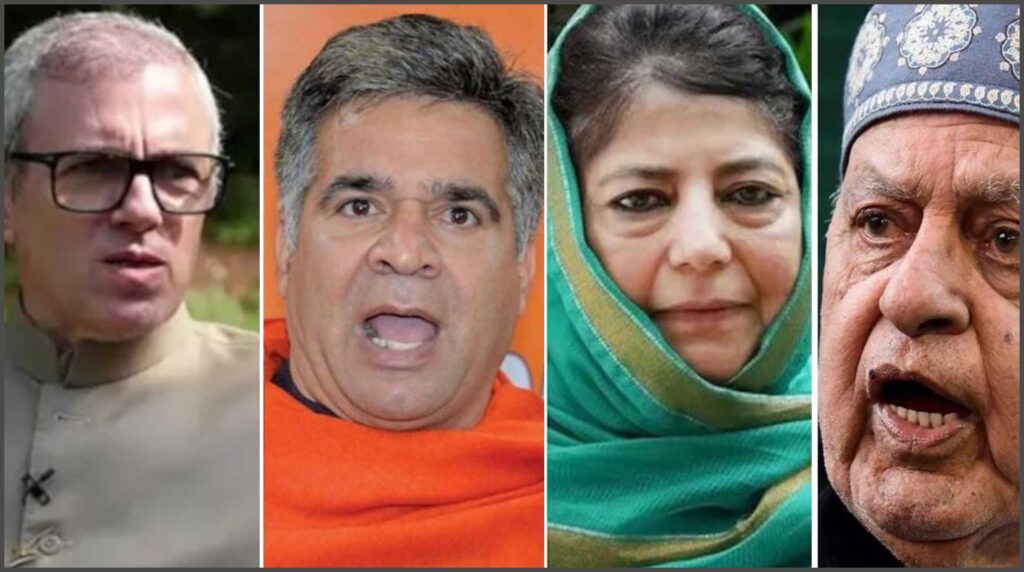
It seems that history in Kashmir has come full circle. Instead of government-backed militants, the current administration under the Lieutenant Governor, state agencies, and Hindu nationalists has suffocated the people. After five years of suffocating repression, a significant number of people voted in recent assembly elections to form a government that could provide some breathing room.
As in 1996, the National Conference emerged as the leading party, winning 42 out of 90 seats, with its ally Congress securing six seats. The National Conference won 35 out of 47 seats in the Kashmir Valley and seven seats out of 43 in Jammu. Meanwhile, the BJP secured 29 seats in the Hindu-majority Jammu region.
Through gerrymandering, the number of Hindu seats in Jammu was increased from 24 to 31, while the number of Muslim seats was reduced from 12 to 9.
Analysts had expected Congress to give the BJP a tough fight in the Hindu belt, but it performed dismally. All six of Congress’s seats came from the Muslim belt—five from the Kashmir Valley and one from the Rajouri region in Jammu. Congress leaders did not run a notable campaign in this region. Rahul Gandhi even campaigned against the National Conference in Sopore, where the Congress candidate finished third.
It seemed like Congress deliberately left the field open for the BJP in Jammu, raising suspicions of collusion. Even Omar Abdullah accused Congress of focusing on the Muslim belt in the Valley and Jammu instead of challenging the BJP in the Hindu belt.
In the Kashmir Valley, voters ensured that their votes were not split due to the presence of too many independent candidates. The influence of the Engineer Rashid-led Awami Ittehad Party and the Jamaat-e-Islami was minimal. Engineer Rashid, who had made waves in the parliamentary elections, failed to make an impact in the assembly elections, largely due to fielding incompetent and questionable candidates.
The People’s Democratic Party (PDP), which had formed a coalition with the BJP in 2015, was reduced to three seats from its earlier 28.
Any candidate suspected of having ties with New Delhi or the BJP was defeated. The BJP managed to win three seats—Bhaderwah, Doda West, and Kishtwar in the Chenab Valley—where the National Conference and Congress had fielded separate candidates, splitting the vote to the BJP’s advantage.
The BJP’s biggest setback came in the Rajouri-Poonch Pir Panjal region, where it won only one out of eight seats. This seat was secured due to gerrymandering, which merged Kalakote with Sunderbani to smooth the BJP’s path. In the rest of the Pir Panjal region, including Nowshera, Rajouri, Darhal, Thanamandi, Poonch-Haveli, Mendhar, and Surankote, the BJP was unsuccessful. Despite bestowing Scheduled Tribe status on the region’s Pahari people, the BJP failed to make significant gains.
Nevertheless, it cannot be ignored that the BJP made inroads in several constituencies where it finished second or garnered over 1,000 votes. Its performance in Gurez was notable, where its candidate Faqir Mohammad received 7,246 votes compared to National Conference candidate Nazir Ahmed Khan’s 8,378 votes. The BJP also finished second in Srinagar’s Habba Kadal, albeit with a large margin of defeat.
These elections were a make-or-break moment for Kashmiris trying to maintain their identity and preserve the region’s demographic structure. In 1996, the National Conference had won a majority by promising maximum autonomy. This time, people hope for the restoration of oxygen, but instead of autonomy, the National Conference campaigned on restoring statehood. Time will tell how successful they are.
For both Kashmiri people and New Delhi, the National Conference’s victory is a win-win situation. Kashmiris were troubled by demographic changes and the arrival of non-state officers at the grassroots level. There is hope that this issue may now be addressed.
For New Delhi, the National Conference is reliable because it doesn’t cross red lines. Its leaders only challenge New Delhi to a certain extent, and they are willing to swallow their pride to remain in power, as demonstrated when they did not resign after the autonomy resolution was rejected by the central cabinet.
This wouldn’t have been possible with someone like Mehbooba Mufti or Engineer Rashid, who could have triggered a constitutional crisis at any moment. Hence, keeping them out of power was necessary.
However, Omar Abdullah now has the rare opportunity to press the Indian government for the release of political prisoners and the repeal of repressive laws imposed by previous governments. He could also create a conducive atmosphere and pressure for meaningful dialogue with Pakistan and the Kashmiri people to find a lasting solution to the Kashmir issue. How he handles the tight grip of the Lieutenant Governor’s administration will reveal his commitment to his people.
All stakeholders must ensure that the voices of Kashmiris are heard and respected in their quest for lasting peace and justice. This will be Omar Abdullah’s ultimate test. If he succeeds, his name will be written in bold letters in history. If not, the sins of his party will be hard to wash away, even with votes.
Hyderabad, October 12, 2024 :- Parents nurture their children with love, care, and great hopes. They educate them, provide them with a stable life, and arrange their marriages with joy. However, in today’s world, children often forget the sacrifices their parents have made for them. Despite knowing that paradise lies beneath a mother’s feet and that a father is the gateway to that paradise, it is heartbreaking to witness incidents where sons disown their parents.
Such tragic stories are becoming increasingly common, with reports surfacing of sons abandoning their mothers and fathers, refusing to care for them in their old age. A similar incident recently occurred in Champapet, Balaji Nagar, Saidabad, Hyderabad.
Mohammed Ali, an 80-year-old man, had been living in a rented house for the past 15 years. He passed away due to natural causes. His four sons were informed of his death, yet all of them refused to take responsibility for their father’s last rites.
Neighbors, distressed by the situation, contacted the local police, who shifted the deceased’s body to a mortuary. Later, a social activist, Smt. Sofia, was notified about the case. With the help of the police, she arranged to retrieve Mohammed Ali’s body from the mortuary. With the support of the local community, the funeral prayers were offered, and his burial took place at a nearby dargah cemetery.
Parents dedicate their lives to raising their children, enduring hardships and braving all kinds of weather to provide for their families. Yet, it is deeply saddening that four sons couldn’t step forward to fulfill their father’s final responsibilities.
A similar incident occurred recently in Hyderabad, where two sons – one an engineer and the other a tehsildar – refused to attend their father’s funeral.
Has humanity become so cold-hearted? How can children abandon the very people who gave them life? It raises the question: Will these same children expect their offspring to care for them in their old age? Life is a cycle – what goes around, comes around. To the youth who neglect their parents, be prepared. Your turn will come soon.