Hyderabad: The Telangana High Court has issued notices to the Police Department and complainants in response to quash petitions filed by Sircilla MLA and Bharat Rashtra Samithi (BRS) working president K.T. Rama Rao (KTR). The cases relate to election matters and alleged defamatory remarks made by KTR.
Justice K. Lakshman, while hearing the petitions, directed the concerned parties to submit their explanations, scheduling the next hearing for March 18. Among the three petitions, the first case pertains to the MLC elections, in which Medipally police registered an FIR in May 2024 based on a complaint by journalist-turned-politician Chintapandu Naveen, also known as Teenmaar Mallanna. The complaint alleged that fabricated videos were circulated to influence the election outcome, naming both KTR and former minister G. Jagadish Reddy as accused. Both leaders have filed quash petitions. However, Justice Lakshman recused himself from hearing this particular case and directed that it be assigned to another judge.
The second case, which KTR sought to quash, was registered at Saifabad Police Station following a complaint by Congress leader Anil Kumar Yadav. The complaint alleged that on August 20, 2024, KTR made a social media post referring to Chief Minister A. Revanth Reddy as ‘Cheap Minister’ and ‘Delhi Ghulam,’ which was claimed to be defamatory and harmful to the CM’s reputation.
The third case under challenge was filed at Utnoor Police Station based on a complaint by Congress leader Atram Suguna. KTR was accused of alleging that the Congress party planned to misappropriate ₹25,000 crore through the Musi project.
The High Court has now sought responses from the police and complainants regarding the second and third cases, while all matters have been adjourned until March 18.
Hyderabad: The Greater Hyderabad Municipal Corporation (GHMC) is taking proactive measures to ensure a smooth and comfortable experience for the Muslim community during the holy month of Ramzan. Deputy Mayor Mothe Srilatha Sobhan Reddy has directed officials to make comprehensive arrangements, including sanitation, road maintenance, and uninterrupted utility services.
On Tuesday, the Deputy Mayor chaired a special meeting with representatives of mosques in the Secunderabad constituency, along with officials from the GHMC, Hyderabad Metropolitan Water Supply and Sewerage Board (HMWSSB), Telangana State Southern Power Distribution Company Limited (TSSPDCL), city police, and other departments. Discussions centered around improving sanitation, repairing roads leading to mosques, ensuring proper lane markings, and deploying special cleaning teams in the evenings after Iftar.
To address public concerns, authorities have been instructed to conduct anti-mosquito fogging every alternate day and coordinate with the traffic department to ease congestion near mosques. A dedicated team will also be formed to handle stray dog issues, while efforts will be made to keep streetlights functional and ensure an uninterrupted power supply.
Additionally, Srilatha instructed the water board to maintain a steady supply of drinking water and promptly address drainage problems. Joint efforts with the health department will be undertaken to uphold hygiene standards. Permissions for festive special bazaars have also been granted to cater to public needs.
Highlighting the significance of Ramzan, the Deputy Mayor assured that GHMC would build on previous initiatives to enhance services this year. She stressed that clean roads, adequate lighting, and mosquito control remain top priorities. Officials were urged to complete all arrangements on time, while citizens were encouraged to share suggestions for further improvements.
Hyderabad, February 16: The 33rd Annual State Conference for Women and Degree Distribution Ceremony of Jamia-tul-Mominat was held at Urdu Maskan, Khilwat, on Sunday, celebrating the academic achievements of 225 graduating students. Parents, scholars, and distinguished guests attended the event, recognizing the graduates, including doctorates, muftis, scholars, and hafizes of the Quran.
The ceremony featured the traditional Dastaar Bandi (presentation of degrees and robes), with Hafiza Rizwana, Sheikh al-Hadith of Jamia-tul-Mominat, emphasizing the critical role of women in shaping society. She highlighted that women’s education is essential for maintaining social harmony and strengthening the moral foundation of communities.
Prominent speakers, including Prof. Muhammad Qutbuddin from the United States, underscored the importance of knowledge and the responsibilities of women in nurturing future generations. They stressed that success lies in balancing family life with intellectual and spiritual growth. Dr. Mutliqa, a respected scholar, elaborated on the historical significance of women in Islam and their contributions to preserving faith and knowledge. She reiterated Islam’s encouragement for women to seek education and lead meaningful lives.
The event also addressed the significance of modesty and the Islamic practice of hijab, portraying it as a symbol of dignity and protection for women. Graduates were honored with certificates and robes in recognition of their dedication to Islamic studies. Special accolades were presented to outstanding students, including 15-year-old Sayeda Mubeen, who received a Gold Medal for completing the memorization of the Quran. Silver medals were awarded to other top achievers.
The ceremony concluded with a prayer by Maulana Syed Shah Darwish Mohiuddin Qadri and the distribution of awards. Notable figures, including Aqeel Ahmed, Secretary of the Islamia Education Society, Maulana Irfanullah Shah Noori, and Dr. Mufti Hafiz Mohammad Sabir Pasha Qadri, were present.
The event reaffirmed the significance of women’s education and their contributions to religious and social spheres, highlighting the role of knowledge in fostering a progressive and morally strong society
New Delhi: A tragic stampede at the New Delhi Railway Station on Saturday night resulted in the death of at least 18 people and left several others injured. The incident, which occurred on platforms 14 and 15, is believed to have been triggered by overcrowding following the cancellation of two trains to Prayagraj. A two-member high-level committee has been formed to investigate the incident.
Investigation and Compensation Announced
The Railway Ministry has announced a compensation package for the victims, offering ₹10 lakh to the families of the deceased, ₹2.5 lakh for those with grievous injuries, and ₹1 lakh for individuals who sustained minor injuries. Meanwhile, the probe committee has begun its investigation, securing CCTV footage and gathering eyewitness testimonies. Fire officials confirmed that four fire tenders were deployed after receiving distress calls about the stampede at around 9:55 PM. The injured were promptly shifted to Lok Nayak Hospital for treatment.
What Led to the Stampede?
According to DCP (Railways) KPS Malhotra, a large crowd had gathered at platform number 14 due to the arrival of the Prayagraj Express. Passengers from Swatantrata Senani Express and Bhubaneshwar Rajdhani were also present at platforms 12, 13, and 14, leading to an uncontrollable rush. He further revealed that approximately 1,500 general tickets were being sold per hour, which contributed to the chaos.
Political Reactions and Criticism
The opposition has strongly condemned the incident, with the Congress party demanding the resignation of Railway Minister Ashwini Vaishnaw. Congress spokesperson Supriya Shrinate held the minister responsible for the “mismanagement” at the railway station and called for his dismissal if he refuses to step down.
Shiv Sena (UBT) MP Priyanka Chaturvedi also criticized the government, stating on social media: “One needs a conscience to feel remorse and guilt for incompetence that led to the loss of human lives. In the case of the minister, that train of conscience left the station long ago. Instead of resigning, the government will likely target the opposition and create mythical ‘conspiracy theories’ to divert attention.”
Meanwhile, AAP MP Raghav Chadha raised the issue in Parliament, questioning the fairness of charging full ticket prices while forcing passengers to travel in overcrowded conditions. “Where is the justice in treating human beings like cattle after taking full fares from them?” Chadha remarked, sharing a video of his statement from Parliament.
https://twitter.com/i/status/1890982163652219118
As the probe continues, questions are being raised about railway safety and passenger management, with growing demands for accountability in the wake of this tragic incident.
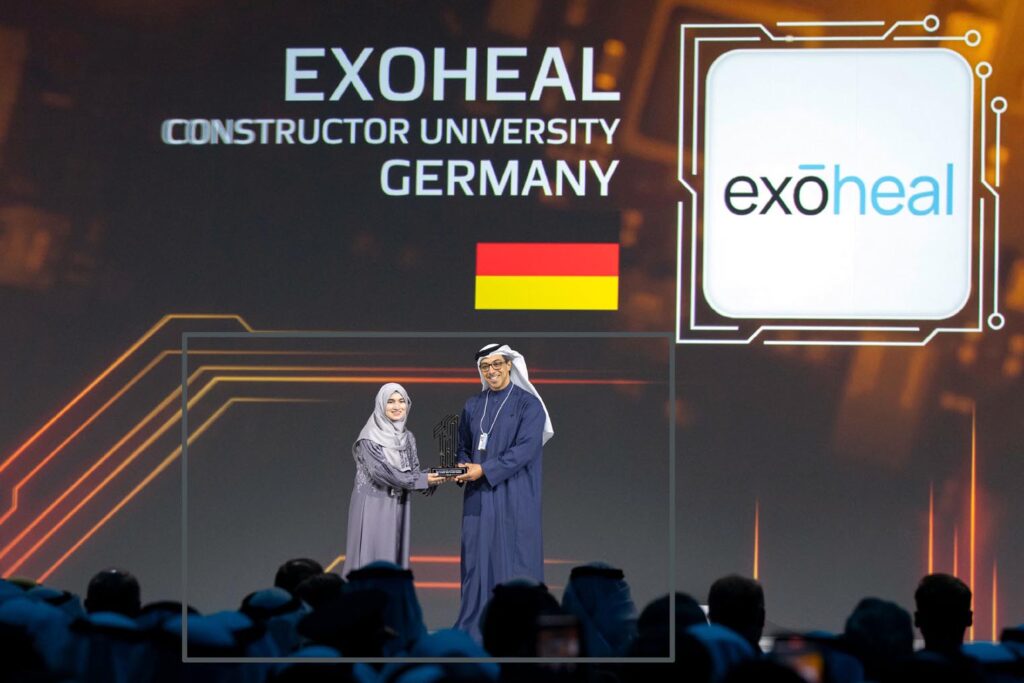
📸 Photo Credit: World Governments Summit via X @WorldGovSummit
Dubai, UAE: Hyderabad-based innovators Zain Ahmed Samdani and Faria Zubair have brought international recognition to India by securing the Gold Award at the Global Best M-Gov Award 2025. The prestigious honor was presented during the World Government Summit (WGS) in Dubai on February 11, marking a significant achievement in assistive technology and rehabilitation solutions.
The award was conferred by Sheikh Mansour bin Zayed Al Nahyan, Vice President, Deputy Prime Minister, and Chairman of the Presidential Court, in the presence of Sheikh Mohammed Bin Rashid Al Maktoum, Vice President and Prime Minister of the UAE and Ruler of Dubai. The siblings were recognized for their pioneering work on ExoHeal, an innovative modular exoskeletal hand rehabilitation device designed to aid stroke and paralyzed patients.
ExoHeal: A Breakthrough in Neurorehabilitation
Developed by the duo under their startup V-Bionic, ExoHeal is an AI-powered robotic glove that utilizes machine learning algorithms to accelerate therapy by 50%. The device also provides personalized treatment plans and gamified experiences, keeping patients engaged throughout their recovery. A key feature of ExoHeal is its remote monitoring system, allowing healthcare professionals to track patient progress in real time. The innovation is not only effective but also more affordable than existing alternatives, significantly reducing recovery time for patients in need.
Zain, the founder of V-Bionic, was inspired to develop ExoHeal in 2015 after witnessing his maternal uncle struggle with paralysis following a stroke. Determined to make robotic rehabilitation more accessible, he embarked on a mission to transform the field through cutting-edge technology. The 24-year-old entrepreneur, born in Hyderabad and raised in Saudi Arabia, is currently pursuing Robotics and Intelligent Systems at Constructor University (formerly Jacobs International University) in Germany. His sister, Faria Zubair, serves as the Head of Design for V-Bionic while simultaneously pursuing a double degree in BBA Online from the University of The People (California) and Arts & English Literature from St. George’s Degree and PG College in Hyderabad, Telangana.
A Legacy of Innovation and Global Recognition
The Global Best M-Gov Award 2025 is not the first international accolade for Zain and his team. In May 2022, V-Bionic won Microsoft’s 2022 Imagine Cup World Championship, solidifying its place as a leader in assistive technology. Later that year, Zain was honored with the Diana Award 2022, one of the highest accolades recognizing young individuals making a significant impact on society through technology.
Expressing his gratitude, Zain stated, “It’s such an honor to receive this award. This achievement is a huge step in realizing our vision to help paralyzed patients access affordable and faster rehabilitation.”
With their latest triumph at the World Government Summit, Zain and Faria continue to make strides in transforming the future of healthcare through innovation and accessibility.
Reviving the Role of Mosques: A New Vision for Muslim Community Development
Photo Aleem Style
Tandur / February 10 (Press Note) – The inauguration of the Mosque of Sayyidna Ali al-Murtada (RA) and the Al-Fada Islamic Center in Tandur marked a historic milestone, not only in religious significance but also in community development. In a groundbreaking initiative, the ASGMK Trust provided land plots for 110 Imams and Muezzins from 52 mosques, ensuring their economic stability and long-term self-sufficiency.
Mosques: Beyond Worship, A Pillar of Society
Speaking at the event, Maulana Mir Latif Ali, Sheikh al-Tafseer of Jamia Nizamia, Hyderabad, emphasized the multifaceted role of mosques in Muslim society. “Mosques have been declared the house of Allah by Allah Himself. On this earth, mosques are the most beloved places to Him. The Imams of mosques are not only spiritual leaders but also the guides and caretakers of society. The initiative to provide homes for those who serve these houses of worship is a commendable step,” he stated.
Mr. Muhammad Mujeeb Khan, founder and trustee of the mosque and Chairman of the ASGMK Trust, distributed land plots to 52 Imams and Muezzins, a first-of-its-kind initiative in Tandur. He highlighted that this step aims to empower religious leaders by addressing their financial security, allowing them to serve the community without economic hardships.
Honoring the Role of Imams and Muezzins
Maulana Dr. Ahsan bin Muhammad al-Hamoomi, Imam and Khateeb of Shahi Mosque Bagh e Aam, Hyderabad, stressed the significant responsibility of Imams and Muezzins. “The Imam is the guarantor of the prayers and faith of worshippers, while the Muezzin is entrusted with the call to prayer. Their role extends beyond leading prayers; they are responsible for guiding the Muslim community.”
Maulana Ahsan al-Hamoomi also announced ASGMK Trust’s plans to offer interest-free loans for those in need, including financial support for aspiring entrepreneurs. “With proper initiatives, mosques can become community centers for education, social welfare, and problem-solving, much like the model set by the Prophet’s Mosque,” he added.
Government and Community Leaders Extend Support
Mr. B. Manohar Reddy, Member of the Assembly of Tandur, praised Mr. Mujeeb Khan’s contributions and assured continued support for such initiatives. Mr. Muhammad Azharuddin, Vice Ameer of the Jamaat-e-Islami Telangana and Andhra, acknowledged the land distribution as an unprecedented effort in Indian history.
Mr. Syed Azmatullah Hussaini, Chairman of the Waqf Board of Telangana, spoke about government efforts to provide monthly allowances for Imams and Muezzins. He also cautioned against threats to Waqf properties, urging vigilance to protect Muslim economic interests.
Mr. Anumula Thirupathi Reddy from Kodangal stressed the need for safeguarding Waqf properties to ensure financial independence for the Muslim community. He emphasized that preserving these assets would reduce dependency on government aid.
A Call for Social Responsibility and Reform
The event witnessed insights from scholars and activists who underscored the need for community-driven development. Maulana Dr. Muhammad Abdul-Aleem from Maulana Azad National Urdu University called upon the affluent Muslim class to invest in social welfare. Maulana Hassan Farooqi highlighted Prophet Muhammad’s (PBUH) teachings on spreading knowledge and using wealth for the betterment of society.
The importance of Fajr prayers and the aesthetic beauty of the Azan were also discussed. Bodybuilder Mr. Mohtashim Ali Khan urged the community to attend congregational Fajr prayers, while Maulana Mirajuddin Ibrar stressed the need to train Muezzins in delivering a melodious call to prayer.
The event concluded with a prayer led by Maulana Shah Hassan bin Muhammad al-Hamoomi Quadri (Madinah Munawwarah), cementing a day of faith, commitment, and transformative community efforts in Tandur.
New Delhi: In a recent report released by NITI Aayog on February 10, 2025, Tamil Nadu, Himachal Pradesh, Uttarakhand, and Kerala have been recognized as top-performing “achiever” states in terms of Gross Enrolment Ratio (GER) in higher education institutions for the academic year 2021-22. This recognition highlights the remarkable progress these states have achieved in expanding access to higher education.
The Economic Survey 2024-25, presented by Union Finance Minister Nirmala Sitharaman on January 31, 2025, indicated a nationwide increase in GER from 23.7% in 2014-15 to 28.4% in 2021-22. This upward trend signifies India’s continuous commitment to strengthening higher education accessibility.
However, significant disparities remain among states. For instance, Gujarat has been identified as lagging in quality education, with a GER of 48.2% in higher secondary classes, compared to Kerala’s 85% and Tamil Nadu’s 81%. This underscores the need for targeted interventions to close the educational gap.
Tamil Nadu and Kerala have successfully implemented policies and initiatives that have driven higher GERs, serving as benchmarks for other states striving to strengthen their educational frameworks. The NITI Aayog report emphasizes the importance of state-level initiatives in boosting higher education enrolment and highlights the impact of well-structured policies in achieving long-term educational goals.
In conclusion, while the national GER has shown commendable growth, the performance of individual states varies significantly. The success stories of these top-performing states provide valuable insights into effective strategies for enhancing higher education access and quality nationwide.
In a decisive victory, the Bharatiya Janata Party (BJP) has won 48 out of the 70 seats in the Delhi Assembly, while the Aam Aadmi Party (AAP) managed to secure only 22 seats. The Congress Party faced its worst-ever performance, failing to win a single seat. Additionally, deposits of 67 Congress candidates were forfeited due to their poor vote count. Despite this, Congress played a significant role in disrupting AAP’s chances in several constituencies.
Leaders of the INDIA alliance believe that the failure of Congress and AAP to join hands led to their disappointing performance. Jammu and Kashmir’s former Chief Minister Omar Abdullah also hinted at this in a social media post after early vote trends emerged. He referenced the Mahabharata in a meme and sarcastically wrote, “And keep fighting amongst yourselves.”
Congress Split Votes, AAP’s Key Leaders Suffer Defeats
Several senior AAP leaders, including former Chief Minister Arvind Kejriwal and former Deputy Chief Minister Manish Sisodia, faced unexpected defeats. Political analysts suggest that Congress candidates played a crucial role in splitting opposition votes. If AAP and Congress had contested the elections together, the results might have been different for both parties.
In the high-profile New Delhi constituency, BJP’s Parvesh Verma defeated Arvind Kejriwal by 4,089 votes, while Congress candidate Sandeep Dikshit secured 4,568 votes. Similarly, in Jangpura, BJP’s candidate, Tarvinder Singh Marwah, defeated Manish Sisodia by 675 votes, while Congress candidate Farhad Suri secured 7,350 votes. These figures indicate that a united AAP-Congress front could have significantly altered the election outcome.
Vote Shift: AAP Loses, BJP and Congress Gain
The elections witnessed a remarkable increase in BJP’s vote share, while AAP suffered a significant decline. Congress, despite its poor seat tally, managed to improve its overall vote percentage. BJP secured 47.3% of the total votes, while AAP received 43.9% and Congress gained 6.4%.
A key takeaway from the results is that AAP’s vote share dropped by 9.72%, whereas BJP’s surged by 7.92%. Congress also saw a 2.18% increase in its vote share. Compared to the 2020 elections, the political landscape of Delhi in 2025 has undergone a dramatic transformation.
Disclaimer:Akai News India is only publishing this report and does not intend to promote or endorse its implementation.
Although insect protein has the potential to be a sustainable and nutritious food source, several challenges hinder its large-scale acceptance in India. Below are four major obstacles that need to be addressed:
1. Cultural and Psychological Barriers
One of the biggest challenges in introducing insect protein in India is the cultural and psychological perception of insects as food.
Food Taboos & Religious Beliefs: In many Indian communities, food choices are deeply influenced by religious and cultural traditions. The idea of consuming insects may be seen as impure or inappropriate by certain religious groups, particularly in Hindu and Jain communities, where vegetarianism is widely practiced.
Association with Pests & Dirt: Unlike some Southeast Asian countries where insects are considered a delicacy, most Indians view insects as pests that contaminate food rather than being a source of nutrition.
Disgust Factor: The mere thought of eating insects can trigger a strong negative reaction in people who are unfamiliar with this practice. Overcoming this psychological resistance will require gradual exposure, education, and innovative food formats.
Possible Solutions: To change public perception, awareness campaigns, celebrity endorsements, and educational programs can be introduced to highlight the nutritional and environmental benefits of insect protein.
2. Lack of Awareness About Nutritional Benefits
Most Indian consumers are unaware of the rich nutritional value that edible insects offer.
High Protein & Essential Nutrients: Insects like crickets, grasshoppers, and mealworms contain up to 60-70% protein, which is higher than conventional meat sources like chicken and beef. They are also rich in iron, zinc, and omega-3 fatty acids, making them a healthy alternative to traditional protein sources.
Digestibility & Gut Health: Research suggests that insect protein is easily digestible and may even have probiotic benefits, supporting gut health.
Sustainability Factor: Producing insect protein requires significantly less land, water, and feed compared to livestock, and it generates lower greenhouse gas emissions. However, most consumers remain unaware of these environmental benefits.
Possible Solutions: Public health campaigns, school curriculums, and social media outreach can help inform people about the advantages of insect-based food products. Additionally, food manufacturers can promote insect protein in familiar forms such as protein powders, cookies, and energy bars to ease consumer hesitation.
3. Regulatory Uncertainty in India
The legal status of edible insects in India remains unclear, which poses a significant challenge to businesses and investors.
No Official Guidelines: The Food Safety and Standards Authority of India (FSSAI) has not yet established clear regulations regarding the sale, farming, or consumption of edible insects. This regulatory gap makes it difficult for food startups and businesses to enter the market with insect-based products.
Import Restrictions: Since insects are not recognized as a mainstream food source in India, importing insect-based protein products from countries where they are legal (such as the USA, Thailand, and the Netherlands) remains complicated.
Consumer Safety Concerns: Without strict guidelines, there are concerns about the quality and safety of insect-based foods, such as contamination, allergies, or improper processing methods.
Possible Solutions: The Indian government can take inspiration from countries like Thailand and the European Union, where edible insects are legally recognized as food. Establishing safety regulations and industry standards will boost confidence in both consumers and businesses.
4. Market Readiness & Consumer Acceptance
Even if awareness and regulations improve, the success of insect protein in India depends on how well it is integrated into the market.
Lack of Availability in Retail Stores: Unlike plant-based or vegan proteins, insect protein is not yet widely available in supermarkets or online grocery platforms in India.
Need for Attractive Food Formats: Instead of selling whole insects (which may deter consumers), companies need to introduce insect protein in familiar and convenient forms, such as protein bars, baked goods, and fortified atta (flour).
Price Factor: Since insect farming for food is still a niche industry in India, initial costs may be high, making insect-based products more expensive than conventional protein sources like lentils and dairy. Lowering production costs and scaling up the industry will be crucial for affordability.
Possible Solutions: Food companies should invest in research and development (R&D) to create insect-based products that blend well with Indian cuisine. For example, cricket flour could be used in rotis, biscuits, and shakes, making it easier for consumers to accept. Additionally, government subsidies or incentives for insect farming can help reduce costs and improve affordability.
Final Thoughts
Fully adopting insect protein in India is quite challenging. While some villages have traditions of consuming insects like grasshoppers attracted to light, this does not mean insect protein will become a staple in every Indian kitchen. For widespread acceptance, the government would need to take significant steps, but due to religious and cultural sensitivities, authorities may hesitate to promote it. Only time will tell what the future holds. For now, widespread adoption of insect protein in India seems unlikely.
Hyderabad: Tragedy struck Hyderabad’s LB Nagar on Wednesday when three labourers lost their lives after a wall collapsed at an under-construction site. The victims, reportedly from Bihar, were buried under the debris as an adjacent wall gave way during excavation work.
Eyewitnesses described a sudden and catastrophic collapse, leaving the workers with fatal injuries. Despite swift rescue efforts, all three succumbed to their wounds before medical assistance could reach them. Authorities have launched an investigation into potential safety violations at the site.
Recurring Construction Disasters in Hyderabad This incident adds to a growing list of construction-related tragedies in the city. Just last year, Mailardevpally in Rajendranagar witnessed a heartbreaking accident when two minors lost their lives after an eight-foot compound wall collapsed on them. Heavy rainfall had weakened the structure, and the wall crumbled while five children were playing nearby. Three-year-old Afriya Parveen and nine-year-old Noor Jahan Khatun died instantly, while two others suffered serious injuries.
The situation was eerily similar to an earlier disaster on May 9, when a retaining wall at a construction site in Bachupally collapsed following heavy rains, claiming the lives of seven migrant workers.
Authorities Under Pressure to Improve Safety Measures The frequency of such incidents has raised serious concerns about construction safety standards in Hyderabad. Experts point to inadequate safety protocols, poor structural assessments, and a lack of stringent enforcement as key reasons behind these recurring accidents.
Meanwhile, in a separate industrial disaster, just hours before the LB Nagar collapse, a massive fire broke out at Shesha Sai Chemical Industry in Cherlapally’s industrial zone. The fire triggered powerful explosions as chemical drums burst in succession, engulfing the area in thick black smoke. Panic gripped nearby residents and factory workers, with locals reporting breathing difficulties due to toxic fumes.
With construction and industrial disasters on the rise, civic authorities are facing mounting pressure to implement stricter regulations and enforce accountability in order to prevent further loss of life.